March 2024

Characteristics of individuals born under each of the 27 nakshatras

Ashwini (Ashvini): Ashwini, the first nakshatra, is ruled by Ketu. People born under Ashwini are often dynamic, energetic, and adventurous. They possess a pioneering spirit and are known for their ability to take risks and explore new territories. They have a natural inclination towards independence and freedom, often seeking unconventional paths in life. However, they may need to guard against impulsive behavior and learn to channel their energy constructively. Bharani: Ruled by Venus, Bharani nakshatra is associated with creativity, passion, and determination. Individuals born under Bharani are often ambitious and driven, with a strong desire to achieve their goals. They are deeply emotional and may experience intense feelings of love and desire. However, they may also struggle with possessiveness and jealousy at times. Creativity and artistic talents are common among Bharani natives, who excel in fields such as music, art, and literature. Krittika (Krittika): Krittika nakshatra is ruled by the Sun and is symbolized by a sharp knife or razor. People born under Krittika are courageous, assertive, and determined. They possess a strong sense of integrity and are known for their leadership qualities. Krittika natives are often highly disciplined and have a natural inclination towards authority and power. They value truth and justice and are not afraid to stand up for what they believe in. However, they may need to be mindful of becoming overly domineering or controlling in their interactions with others. Rohini: Rohini nakshatra is ruled by the Moon and is associated with beauty, sensuality, and nurturing qualities. Individuals born under Rohini are often charming, romantic, and compassionate. They have a deep appreciation for the finer things in life and may excel in artistic pursuits such as music, dance, or fashion. Rohini natives are highly empathetic and possess a natural ability to connect with others on an emotional level. However, they may need to guard against becoming too emotionally dependent or possessive in their relationships. Mrigashira (Mrigashirsha): Ruled by Mars, Mrigashira nakshatra is symbolized by a deer’s head. People born under Mrigashira are curious, adaptable, and communicative. They possess a sharp intellect and are skilled at expressing themselves effectively. Mrigashira natives are often drawn to intellectual pursuits and may excel in fields such as writing, journalism, or public speaking. They have a natural curiosity about the world around them and are constantly seeking new experiences and knowledge. However, they may need to be mindful of becoming too restless or scattered in their pursuits. Ardra: Ardra nakshatra is ruled by Rahu and is associated with storms, turbulence, and transformation. Individuals born under Ardra are often intense, passionate, and emotionally complex. They possess a deep understanding of human nature and may be drawn to psychology, healing arts, or spiritual practices. Ardra natives are highly intuitive and may have psychic abilities or a strong connection to the unseen realms. However, they may also struggle with inner turmoil and emotional upheaval, requiring them to find healthy outlets for their intense emotions. Punarvasu (Punarpoosam): Ruled by Jupiter, Punarvasu nakshatra is associated with renewal, growth, and expansion. People born under Punarvasu are optimistic, generous, and philosophical. They possess a deep sense of faith and may be drawn to spiritual or religious pursuits. Punarvasu natives are often blessed with good fortune and may experience success in their endeavors. They have a natural ability to uplift and inspire others, often serving as mentors or guides. However, they may need to guard against becoming too idealistic or overly indulgent in their pursuits. Pushya (Pooyam): Pushya nakshatra is ruled by Saturn and is associated with nourishment, support, and protection. Individuals born under Pushya are nurturing, responsible, and compassionate. They possess a strong sense of duty and may excel in caregiving professions or roles that involve taking care of others. Pushya natives are highly reliable and dependable, often serving as pillars of strength for their families and communities. However, they may need to be mindful of becoming too overbearing or controlling in their desire to help others. Ashlesha (Ayilyam): Ashlesha nakshatra is ruled by Mercury and is symbolized by a coiled serpent. People born under Ashlesha are intuitive, secretive, and emotionally intense. They possess a keen intellect and are skilled at uncovering hidden truths and motives. Ashlesha natives are highly perceptive and may excel in fields such as psychology, detective work, or espionage. They have a natural ability to manipulate and influence others, often using their charm and wit to achieve their goals. However, they may also struggle with trust issues and may be prone to manipulation themselves. Magha (Magham): Ruled by Ketu, Magha nakshatra is associated with ancestry, tradition, and legacy. Individuals born under Magha are proud, dignified, and authoritative. They possess a deep sense of history and may be drawn to genealogy or ancestral studies. Magha natives are often highly respected and may hold positions of power or authority within their communities. They have a strong sense of duty and may feel a deep responsibility to uphold the traditions of their forefathers. However, they may need to guard against becoming too rigid or dogmatic in their beliefs. Purva Phalguni (Pooram): Ruled by Venus, Purva Phalguni nakshatra is associated with passion, pleasure, and romance. People born under Purva Phalguni are charming, charismatic, and magnetic. They possess a natural grace and elegance that draws others to them. Purva Phalguni natives are highly creative and may excel in fields such as art, music, or theater. They have a deep appreciation for beauty and may be drawn to luxurious or indulgent lifestyles. However, they may need to be mindful of becoming too self-indulgent or superficial in their pursuits. Uttara Phalguni (Uthiram): Ruled by the Sun, Uttara Phalguni nakshatra is associated with generosity, benevolence, and leadership. Individuals born under Uttara Phalguni are noble, dignified, and honorable. They possess a strong sense of duty and may excel in positions of authority or leadership. Uttara Phalguni natives are highly principled and may be drawn to causes that promote social justice and equality. They have a natural ability to inspire and motivate others, often

Characteristics of individuals born under each of the 27 nakshatras Read More »

Uncategorized
The method of finding the Lagna

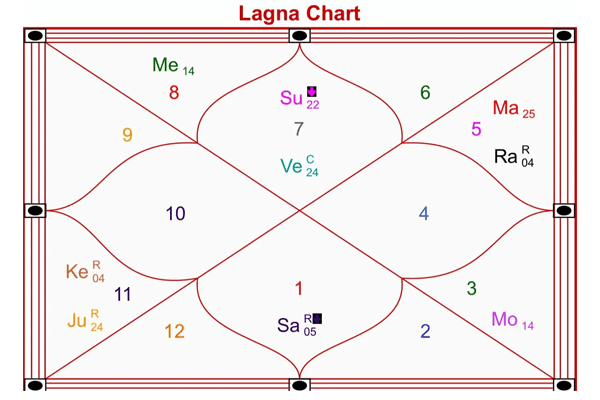
The method of finding the Lagna (Ascendant). The method of finding the Lagna (Ascendant) for the birth time. The sign of the Zodiac rising in the eastern horizon at the time of birth is the Ascendant or lagna, that is to say, the rising Sign at birth is the ascendant. At sunrise on each day, that sign named after the Hindu solar month (in which the day falls) will be rising in the eastern horizon. This is because during each month the Sun would be in the corresponding sign of the Zodiac. For example, during the solar month Maesha, the Sun occupies, (it apparently moves through) the sign Maesha (Aries). Thus, on the first day of Maesha, the Sun and the sign Maesha would rise together and the sign Moesha would be at the eastern horizon for about 1/12 of a day (2 hours) from Sunrise. On the second day of the Maesha month, Sun apparently would have moved I degree in the sign Maesha, so that the sign Maesha would be I degree up in the eastern horizon at Sunrise. Thus, the sign Maesha would be 4 minutes earlier than the Sun (since I degree corresponds to 4 minutes). Hence Maesha sign would be in the eastern horizon from 4 minutes before sunrise till 1 hr. 56 min. after sunrise. Hence on the second day the rising time for Maesha is Ihr. 56 min. after sunrise. Similarly on the 16th of Maesha, the Maesha Sign would be in the eastern horizon only. 4 min multiplied by 15 = 1 hr after Sunrise. Thus, the rising period or the rising of a month would gradually fall at the rate or 4 minutes per day and will reduce to zero after the 30th day that month. 30 x 4 min. = 2 hrs. This means that the Sun has crossed over to the next sign and the month also would have changed. The rising period on each day of the rising sign can thus be calculated, and it is called the udayaathpara, meaning balance of the sign after sunrise, rising period of that sign in that date. After fixing the time of rising of the rising sign, the next 2 hrs. will be the rising period of the next sign and so on, till the next sunrise. This is only an approximate method of calculation, because, due to the shape of the orbit and the difference between the latitudes of each place on the to place, depending on the latitude. The riing period of each sign, called raasimaana has to be for each place and these data are usually available in the conventional almanacs. These a usually in Ghatis and Vighatis, which can converted into hour-minute (1 Ghati=24 mins,  1 Vighati = 24 Seconds). Further the sunrise for each day also varies from place to place and from day to day. The time of sunrise for each day is given in almanacs.

The method of finding the Lagna Read More »

Uncategorized, , , , ,

Can anyone  predict your end of life during this birth ?

Can anyone  predict your end of life during this birth ? This is a personal view and may be viewed accordingly. Yes it possible in three  ways: (i) Randomly (2) by a calculating mechanism through clock (3) through Medical Astrology. Predictions through (1)  and (2) are not reliable for various reasons. The third method of predicting one’s end of life through Medical Astrology is most accurate and more reliable.  This is due to the facts stated below as described in various website portals: The method of calculating the time of death or Ghantam is as follows: There are two stages or phases to find out the time of death for any living being on earth. In colloquial usage it is  known as ” Ghantam” meaning deathly”. The Ghantam or deathly situation can be predicted and One can survive the first stage or Ghantam through Prayers, Remedy, Empowerment of Powers and spiritual activities. The second stage of Ghantam can also be predicted accurately . But this time the exit is inevitable and is the final path to exit. Both the Ghantam can be predicted through Medical Astrology accurately  with the correct Jathakam or horoscope analysis.This is possible by an  Astrolger who must possess special powers and should be gifted, intuitive, possess mantra shakti and powers to alleviate the path of Ghantam through calculations , permutation and combination along with  predictions on the Gochara  ( Dasa, Bhukti,Upadasa, Upabhukti, silent Dasa and silent bhukti in Rasi. Bhava chart. Dr.Hariharan who is an expert in predicting Death, Life after Death through Medical Astrology has several proven case studies to prove his point. JPS may be contacted for more details in getting the correct prediction on BOTH STAGES OF TIME OF DEATH, LIFE AFTER DEATH . What others say on this subject: “Most Hindus believe that humans are in a cycle of death and rebirth called samsara. When a person dies, their atman (soul) is reborn in a different body. Some believe rebirth happens directly at death, others believe that an atman may exist in other realms” What happens in Hinduism after death? “Hindu beliefs about death are centred on rebirth and reincarnation – a person’s physical body leaves, but their soul reincarnates into another life after eleven days. We believe the soul needs this food for the journey to another world” How is life after death? “After the death of your body, your soul lives on in a world beyond the physical world. The major Eastern religions (Hinduism, Buddhism and Sikhism) also teach that there is something about you that survives the death of your body. It does not leave this world though. Instead, it finds another body to go live in.”  Death clock calculator: “The ‘Death Clock Calculator’ evaluates a range of health and lifestyle variables, including one’s outlook on life (whether pessimistic, sadistic, or normal) and smoking status. Research findings in the gene expression analyses of the biological clock indicate that it could be a powerful method for estimation of time of death of a person. Biological rhythms could also be potential tools to draw conclusions on the death circumstances and the identity of a deceased person.  While no tool can predict the future with absolute certainty, the purpose of our Death Clock is to help you not only have a fascinating glimpse into the potential length of your life, but also more importantly encourage you to make healthier lifestyle choices.”                                                                                           Dr. M.Hariharan

Can anyone  predict your end of life during this birth ? Read More »

Uncategorized, , , , , ,

Why wear a Tilak.

The application of Tilak, a venerable tradition with deep spiritual significance, a practice steeped in antiquity, carries profound spiritual significance, often overlooked by many. Its application across various parts of the body, including the forehead, neck, shoulders, elbows, chest, and ankles, is not merely a cosmetic ritual but a symbolic embrace of higher knowledge and divine connection. The forehead, known as the position of Vidya or knowledge, symbolizes internal wisdom and spiritual progression. In the ancient text of Samudrika Shastra, a wide forehead is regarded as a sign of developed intellect and wisdom, reflecting the Supreme Soul. Each part of the head representing different elements—forehead the sky, eyebrows the air, eyes the fire, tongue the water, and nose the earth. Tilak application transcends mere aesthetics; it embodies a spiritual journey towards embracing Parabrahma, the embodiment of pure knowledge, and alleviating physical discomforts. Known as Lalada Tilakam, this practice extends beyond superficial beauty enhancement, serving as a symbol of wisdom and enlightenment. Applied after bathing, Tilak signifies the cleansing of both the body and the mind, akin to purging the dirt of ignorance from one’s existence. Among the materials used for Tilak, Bhasma, Sandalwood, and Saffron (Kumkum) hold significant symbolism, representing the three visions of wisdom and the three spiritual forces—Vishnu, Shiva, and Shakti. Bhasma, derived from ashes, embodies the formless, all-pervading essence of Shiva, the destroyer. Siva tatva is the formless, Nirguna and all-pervading vision of true self, whose ashes burn no more. Ashes are all that is left after material things have been burnt. Similarly, even if the entire universe is destroyed, the Self remains. ‘Shiva’ is this Paramatma tatva. When applied horizontally across the forehead, it signifies the various stages of life one has traversed. Sandalwood, on the other hand, symbolizes the omnipresence of Vishnu, the preserver, and is applied vertically to invoke devotion. Vishnu is Saguna Brahma. The word ‘Vishnu’ means all-pervasive. Sandalwood is used to indicate this. The quality of sandalwood is fragrance. The smell of sandalwood spreads quickly. Sandalwood is a very good symbol to indicate the omnipresence of Vishnu and because Vishnu is a God rich in holy sattva qualities, with its fragrance, softness and coolness, sandalwood, which is also a medicine, signifies devotion to Vishnu, Sandalwood should be touched with the ring finger. It should touch the middle of the forehead vertically. Wearing sandalwood across the forehead like ashes is prohibited by Vaishnava practices. Sandalwood is worn on the upper body as a symbol of the spinal cord. Vaishnavites call it ‘Urdhwapundram’. (Three vertical lines on the forehead)  As a simple Tilak. it signifies that if the body is the form of the universe, then Vishnu is the main pillar. Saffron, representing Shakti, is placed centrally to denote the guiding force encompassing the vast universe. Saffron is a goddess form. It indicates Mahamaya tatva. It can be applied in the middle or lower on the forehead. Applied as a circle or bindu, a tiny speck compared to the vast universe, to indicate the great power that guides everything. To highlight the wonder that this single point guides the great expanse. Saffron, Kumkum, and Red indicate the form of the Goddess. The shape and the colour of Kumkum is the true form of Mahamaya. The suitable colour for this is red. Blood is the form of nature and Prana is the form of spirit. The blood-coloured saffron touching the centre of the soul, the seat of the soul, signifies the union between soul and nature. Saffron should be touched with middle finger. Shaktism says that saffron should not be applied horizontally or vertically on the forehead. The combination of these materials reflects a harmonious unity, signifying the divine interplay of Shiva Shakti, Vishnumaya, and Tripurasundari. Each material is applied with specific fingers and in particular positions according to respective traditions, highlighting the intricate nuances of spiritual practice. Regular Tilak application serves to purify the subtle channels of the mind-body organism, bringing balance and increased devotion. It activates the Jnanachakra, fostering wisdom, intuition, concentration, and memory power. Through this practice, one attains a state of steadiness, heightened awareness, and control over prana and thoughts, stimulating all faculties of the mind. In essence, Tilak transcends its cosmetic appearance, serving as a conduit for spiritual elevation and divine connection. It embodies the ancient wisdom of our philosophical traditions, guiding practitioners towards inner enlightenment and profound spiritual growth.

Why wear a Tilak. Read More »

Uncategorized, , , , , , , , , , , , ,

lagna

lagna Ascendant, or Lagna (ल), holds a position of utmost significance in the realm of astrology, symbolizing the intersection of cosmic forces with individual destinies. Its determination marks the emergence of a specific zodiac sign on the eastern horizon at the precise moment of an event, such as the birth of a child. The ascendant’s calculation involves various methodologies, each offering distinct insights into its interpretation: The cyclical movement of the Earth around its axis and the apparent motion of the Sun through the zodiac signs form the basis for understanding the ascendant’s significance. Each moment witnesses a unique zodiac sign ascending on the eastern horizon, aligning with the Sun’s position and marking the beginning of a new cycle. Just like the year, the time taken by the earth to revolve around the Sun, which is about 365 days, is divided into 12 parts and each part is denoted by its specific name (Maesha, Vrishabha, etc). The time between a sunrise to next sunrise (about 24 hours) is also divided into 12 parts of about 2-hour duration and each part is given the name of the 12 signs. Thus, if the sunrise on the first of a month (Hindu month) is at 6.30 A.M., about two hours from that time is the first Sign (this means that this Sign of the Zodiac will be on the eastern horizon, rising with the Sun). The next two hours, the second sign and so on. It is evident that the two hours before the next sunrise will be the 12th Sign. In other words, the Zodiac is divided into 12 Signs-Marsha, Vrishabha, ……. Meena, etc. The sign (Rasi) which is found in the eastern horizon at any specified time is called the Ascendant or Lagna (Udayalagna/rising sign). Thus, if a child is born at 11 A.M. on the first day of the month Vrischika, Lagna or ascendant is calculated as follows. 6.30 AM. The rising sign on that day is Scorpio (Vrischika) Therefore 6 30 to 8.30 AM, is the time roughly when the Sign Scorpio (Vrischika) would be on the eastern horizon. The next Sign Sagittarius (Dhanus) will be on the eastern horizon during the next 2 hours roughly (8.30 to 10.30 A.M.). From 10.30 A.M. the Sign Capricorn (Makara) would rise and continue to be on the eastern horizon till 12.30 noon. Therefore, the ascendant of the child born at 11 A.M. in the month of Scorpio (Vrischika) will be in the sign Capricorn (Makara). Therefore, the ascendant of the child born at 11 A.M. in the month of Scorpio (Vrischika) will be in the sign Capricorn (Makara). This information itself, namely that the child is born in the Capricorn ascendant (Makara Lagna), would indicate, quite a lot about the behaviour and general features of that child. The experiences (good as well as bad) in the life of a person, as also all the relations between persons and different aspects of the universe, have been classified into 12 parts in astrology, similar to the division of space and time into 12 parts. Human experiences (including the previous births of the soul) and human relations have also been divided into 12 distinct sets. These sets are called the 12 houses or sectors or Bhaava. The sign at a birthtime is the Janmalagna (ascendant) of the person. In the birth chart, the Lagna will be indicated in that sign which rises in the east. The ascendant is marked as the first Bhaava (First house) for the person. Thus, having fixed the first house, the second, third, etc. are marked in subsequent signs starting from the first house, in the clockwise order. For example, for a person whose Lagna (ascendant) is in the Sign Cancer (Kataka), his second house is Leo (Simha), third house is Virgo (Kanya), eleventh house is Taurus (Vrishabha) and twelfth house is Gemini (Mithuna), If in a horoscope, the ascendant is in the sign Sagittarius (Dhanus), then the native has his first house or Lagna Bhaava in Sagittarius (Dhanus), the second house in Capricorn (Makara), third house in Aquarius (Kumbha.). eleventh house in Libra (Thulaa) and twelfth in Scorpio (Vrischika), etc. It is evident from the above two examples that each house from the first to the twelfth may fall in any sign, depending upon (Lagna) which is decided by the birth-time. If in the first example, the VII house is Capricorn (Makara), in the second example the VII house is Gemini (Mithuna). This is because of the difference in lagna in the two cases. Sign and house do not have the same meaning. The division of Zodiac into signs is based on the motion of the Sun while division of the Zodiac into houses is based on the birth-time (Lagna) and rotation of earth on its axis. The identification of the 12 houses in a birth-chart is absolutely important. Therefore, in order to identify the houses, one should be able to the Lagna in each birth chart. In practical terms, the ascendant at birth, known as the Janmalagna, shapes an individual’s characteristics and life experiences. It serves as the cornerstone of the birth chart, with subsequent houses delineated clockwise from the ascendant, each representing distinct aspects of human existence and relationships. More about method of finding Lagna later….

lagna Read More »

Uncategorized, , , , , , , , , ,

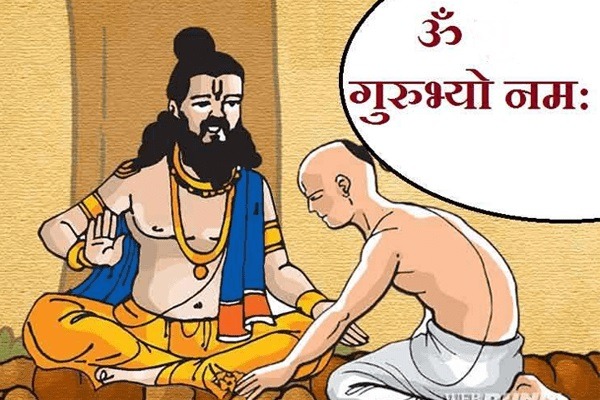
Om Gurubhyo Namaha.

Om Gurubhyo Namaha. Namaskaram. Welcome to Muthuswamy’s Astrology Blogs. Within these pages, you will discover a curated collection of Indian Astrology concepts, inspired by the profound teachings of the late Prof NE Muthuswamy, as encapsulated in the Magnum Opus, ‘Encyclopaedia of Indian Astrology’. I humbly attribute all content to the visionary wisdom of Prof NE Muthuswamy, who meticulously extracted insights from timeless texts such as Brihadprasarahora, Yavanajathakam, Brihadjathakam, Jaathakaparijatham, Phaladeepika, Sarvarthachintamani, Prasnanushatanapaddathi, Prasnamarga, Jatakatatwam, Brihadsamhita, and Saravali, among others. It’s important to note that I do not claim originality in these ideas; rather, my aim is to ignite curiosity in the subtle nuances found within these masterpieces. For those seeking deeper understanding, additional resources are available at jyothishapracharasabha.com. Furthermore, I’ve endeavoured to provide foundational knowledge for casual readers. The realm of Indian Astrology is both enchanting and enigmatic. Its depth and breadth encompass every facet of human existence. However, it is essential for students to immerse themselves fully in its study before venturing into predictive practices to aid our fellow beings. Resolve, devotion, faith, and diligent effort are prerequisites for embarking on this transformative journey. Join us in exploring the science that unveils the mysteries of the unknown.

Om Gurubhyo Namaha. Read More »

Uncategorized

Star names in some Indian languages

Star names in some Indian languages  #  Sanskrit संस्कृतम्  Odia ଓଡିଆ  Malayalam മലയാളം  Tamil தமிழ்  Telugu తెలుగు  Kannada ಕನ್ನಡ  Bengali বাংলা  1  Ashvinī अश्विनी  Aswini ଅଶ୍ଵିନୀ  Ashvati അശ്വതി  Asvini அஸ்வினி  Ashwini అశ్విని  Ashwini ಅಶ್ವಿನಿ  Ashwini অশ্বিনী  2  Bharanī भरणी  Dwijaa ଦ୍ଵିଜା  Bharaṇi ഭരണി  Baraṇi பரணி  Bharani భరణి  Bharani ಭರಣಿ  Bharaṇi ভরণী  3  Krittikā कृत्तिका  Krutikaa କୃତିକା  Kārttika കാർത്തിക  Kārthigai கார்த்திகை  Krittika కృత్తిక  Kritika ಕೃತಿಕ  Krittika কৃত্তিকা  4  Rohiṇī रोहिणी  Rohini ରୋହିଣୀ  Rōhiṇi രോഹിണി  Rōgiṇi ரோகிணி  Rohini రోహిణి  Rohini ರೋಹಿಣಿ  Rohiṇi রোহিণী  5  Mrigashīrsha मृगशीर्ष  Mrugasiraa ମୃଗଶିରା  Makayiram മകയിരം  Mirugasīriḍam/Mirugaḻi மிருகசீரிடம்/மிருகழி  Mrugashira మృగశిర  Mrigashira ಮೃಗಶಿರ  Mrigashira মৃগশিরা  6  Ārdrā आर्द्रा  Adra ଆଦ୍ରା  Ātira or Tiruvātira ആതിര (തിരുവാതിര)  Tiruvādirai திருவாதிரை  Arudra ఆరుద్ర  Ardra ಆರ್ದ್ರ  Ardra আর্দ্রা  7  Punarvasu पुनर्वसु  punarbasu ପୁନର୍ବସୁ  Puṇartam പുണർതം  Puṉarpūsam புனர்பூசம்  Punarvasu పునర్వసు  Punarvasu ಪುನರ್ವಸು  Punarbasu পুনর্বসু  8  Pushya पुष्य  Pushyaa ପୁଷ୍ୟା  Pūyam പൂയം  Pūsam பூசம்  Pushya పుష్య  Pushyami ಪುಷ್ಯ  Pushya পুষ্যা  9  Āshleshā आश्ळेषा / आश्लेषा  Ashleshaa ଆଶ୍ଳେଷା  Āyilyam ആയില്യം  Āyilyam ஆயில்யம்  Ashlesha ఆశ్లేష  Ashlesha ಆಶ್ಲೇಷ  Ashleshā অশ্লেষা  10  Maghā मघा  Magaa ମଘା  Makam മകം  Magam மகம்  Makha మఖ  Magha ಮಘ  Magha মঘা  11  Pūrva or Pūrva Phalgunī पूर्व फल्गुनी  Purba Falguni ପୂର୍ବ ଫାଲ୍ଗୁନୀ  Pūram പൂരം  Pūram பூரம்  Pubba పుబ్బ  Poorva ಪೂರ್ವ  Purbaphālguni পূর্বফাল্গুনী  12  Uttara or Uttara Phalgunī उत्तर फल्गुनी  Uttara falguni ଉତ୍ତର ଫାଲ୍ଗୁନୀ  Utram ഉത്രം  Uttiram உத்திரம்  Uttara ఉత్తర  Uttara ಉತ್ತರ  Uttar Phālguni উত্তরফাল্গুনী  13  Hasta हस्त  Hastaa ହସ୍ତା  Attam അത്തം  Asttam அஸ்தம்  Hasta హస్త  Hastaa ಹಸ್ತ  Hastā হস্তা  14  Chitrā चित्रा  Citraa ଚିତ୍ରା  Cittira ചിത്തിര (ചിത്ര)  Cittirai சித்திரை  Chitta చిత్త  Chitra ಚಿತ್ರ  Chitrā চিত্রা  15  Svātī स्वाती  Swati ସ୍ଵାତୀ  Chōti ചോതി  Suvāti சுவாதி  Swathi స్వాతి  Swathi ಸ್ವಾತಿ  Swāti স্বাতী  16  Vishākhā विशाखा  Bishakha ବିଶାଖା  Vishākham വിശാഖം  Visākam விசாகம்  Vishakha విశాఖ  Vishakha ವಿಶಾಖ  Bishakha বিশাখা  17  Anurādhā अनुराधा  Anuradha ଅନୁରାଧା  Anizham അനിഴം  Anusham அனுஷம்  Anuradha అనురాధ  Anuradha ಅನುರಾಧಾ  Anuradha অনুরাধা  18  Jyeshtha ज्येष्ठा  Jyosthaa ଜ୍ୟୋଷ୍ଠା  Kēṭṭa (Trikkēṭṭa) തൃക്കേട്ട  Kēṭṭai கேட்டை  Jyeshtha జ్యేష్ఠ  Jyeshtha ಜ್ಯೇಷ್ಠ  Jyestha জ্যেষ্ঠা  19  Mūla मूल  Mulaa ମୂଳା  Mūlam മൂലം  Mūlam மூலம்  Moola మూల  Moola ಮೂಲ  Mula মূলা  20  Pūrva Ashādhā पूर्वाषाढा  Purbasaadhaa ପୂର୍ବାଷାଢା  Pūrāṭam പൂരാടം  Pūrāṭam பூராடம்  Poorvashadha పూర్వాషాఢ  Poorvashadha ಪುರ್ವಾಷಾಡ  Poorbashada পূর্বাষাঢ়া  21  Uttara Ashādhā उत्तराषाढा  Uttarasaadha ଉତ୍ତରଷାଢା  Utrāṭam ഉത്രാടം  Uttirāṭam உத்திராடம்  Uttarashadha ఉత్తరాషాఢ  Uttarashadha ಉತ್ತರಾಷಾಡ  Uttarashada উত্তরাষাঢ়া  22  Shravana श्रवण  Sravana ଶ୍ରବଣା  Tiruvōnam ഓണം (തിരുവോണം)  Tiruvōnam திருவோணம்  Shravana శ్రవణ  Shravana ಶ್ರವಣ  Shraban শ্রবণা  23  Shravishthā or Dhanishta श्रविष्ठा or धनिष्ठा  Dhanishathaa ଧନିଷ୍ଠା  Aviṭṭam അവിട്ടം  Aviṭṭam அவிட்டம்  Dhanishta ధనిష్ఠ  Dhanishta ಧನಿಷ್ಠ  Dhanishta ধনিষ্ঠা  24  Shatabhishā or Shatataraka शतभिषक् / शततारका  Satavisaa ସତଭିଷା  Chatayam ചതയം  Sadayam சதயம்  Shatabhisha శతభిష  Shatabhisha ಶತಭಿಷ  Shatabhisha শতভিষা  25  Pūrva Bhādrapadā पूर्वभाद्रपदा / पूर्वप्रोष्ठपदा  Purba vadrapada ପୂର୍ବଭାଦ୍ରପଦ  Pūruruṭṭāti പൂരുരുട്ടാതി  Pūraṭṭādi பூரட்டாதி  Poorvabhadra పూర్వాభాద్ర  Poorva Bhadrapada ಪೂರ್ವ ಭಾದ್ರಪದ  Poorbabhadra পূর্বভাদ্রপদ  26  Uttara Bhādrapadā उत्तरभाद्रपदा / उत्तरप्रोष्ठपदा  Uttara vadrapada ଉତ୍ତରାଭାଦ୍ରପଦ  Uttṛṭṭāti ഉത്രട്ടാതി  Uttiraṭṭādi உத்திரட்டாதி  Uttarabhadra ఉత్తరాభాద్ర  Uttara Bhadrapada ಉತ್ತರ ಭಾದ್ರಪದ  Uttarbabhadra উত্তরভাদ্রপদ  27  Revati रेवती  Revati ରେବତୀ  Rēvati രേവതി  Rēvati ரேவதி  Revati రేవతి  Revati ರೇವತಿ  Rebati রেবতী  Wikipedia Attribute – https://en.wikipedia.org/wiki/Nakshatra

Star names in some Indian languages Read More »

Uncategorized

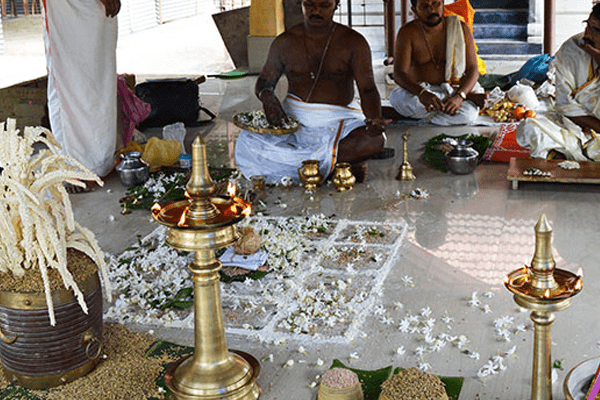
ASHTAMANGALA PRASNA

ASHTAMANGALA PRASNA   Ashtamangala Prasna, also known as Ashta Mangala Prasnam, is a traditional practice in Hinduism, particularly in South India, used to seek divine guidance and blessings for various endeavors, such as the consecration of temples, the inauguration of events, or addressing problems and concerns in people’s lives. The term “Ashtamangala” refers to eight auspicious symbols or objects, and “Prasna” means questioning or inquiry.  During an Ashtamangala Prasna ceremony, a group of priests or astrologers conducts a series of rituals and divination techniques to communicate with the divine and seek answers to specific questions or concerns. The priests typically use various tools such as cowrie shells, coins, grains, and sometimes astrology charts to interpret the signs and symbols revealed during the ceremony.  The eight auspicious symbols or objects, which are central to the Ashtamangala Prasna, can vary slightly depending on regional traditions but commonly include:  1. Metal Box: Symbolizes containment, protection, and preservation. 2. Mirror: Signifies reflection, self-awareness, and inner beauty.   3. Gold Coin: Represents wealth, prosperity, and abundance.  4. White Flower: Symbolizes purity, innocence, and spirituality.  5. Akshata (Rice and Paddy Mixed): Represents fertility, sustenance, and auspiciousness.  6. Fruits: Signify nourishment, abundance, and the sweetness of life.  7. Betel Leaf with Areca Nut: Symbolizes hospitality, unity, and auspicious beginnings.  8. Palm Leaf and Oil Lamp: Represents knowledge, enlightenment, and dispelling darkness.  These symbols are used during the divination process to interpret the answers received from the divine realm and they are integral to the Ashtamangala Prasna ceremony and are used by priests or astrologers during the divination process to seek divine guidance and blessings for various endeavors or concerns. The priests carefully analyse the patterns, movements, and positions of these objects to provide guidance and insights into the questions posed by the individuals or the community. Overall, the Ashtamangala Prasna ceremony is a deeply rooted tradition aimed at seeking divine guidance and blessings for the well-being and prosperity of individuals, communities, and sacred endeavors in Hinduism.  The procedure for conducting Ashtamangala Prasna can vary slightly depending on regional traditions and the specific purpose of the ceremony. However, here’s a general outline of the steps involved: Preparation-The venue for the ceremony, often a temple or a sacred space, is cleaned and purified. The necessary items for the ritual, including the eight auspicious symbols (as per your list or traditional symbols), offerings, and tools for divination, are arranged.  Invocation of Deities- The ceremony begins with the chanting of prayers and mantras to invoke the blessings of deities and seek their guidance for the proceedings.  Selection of Participants- A group of priests or astrologers, knowledgeable in the rituals and practices of Ashtamangala Prasna, are chosen to conduct the ceremony.  Questioning- The individuals or community members seeking guidance present their questions or concerns to the priests. These questions may relate to personal matters, community issues, or the consecration of temples, among other things.  Arrangement of Auspicious Symbols-The eight auspicious symbols are arranged in a specific manner within the ceremonial space. Each symbol holds significance and is believed to channel divine energy and guidance.  Divination Process- The priests use various divination techniques, such as tossing cowrie shells, coins, grains, or other objects, to seek answers from the divine realm. They interpret the patterns, movements, and positions of these objects to provide insights into the questions posed.  Interpretation- Based on the divination results, the priests interpret the signs and symbols revealed during the ceremony. They offer guidance, predictions, and solutions to address the concerns raised by the participants.  Offerings and Prayers-Offerings such as fruits, flowers, incense, and lamps are made to the deities as gratitude for their blessings and guidance. Prayers and mantras are recited to conclude the ceremony and invoke continued divine support.  Conclusion- The Ashtamangala Prasna ceremony concludes with blessings bestowed upon the participants, and they are encouraged to act upon the guidance received during the ritual.  Follow-Up- Participants may be advised to perform certain rituals, remedies, or actions based on the guidance received during the ceremony to mitigate any challenges or enhance positive outcomes.  Overall, the Ashtamangala Prasna ceremony is a sacred and elaborate ritual aimed at seeking divine guidance, blessings, and solutions to various concerns and endeavors in Hindu tradition. 

ASHTAMANGALA PRASNA Read More »

Uncategorized

Planetary Configuration

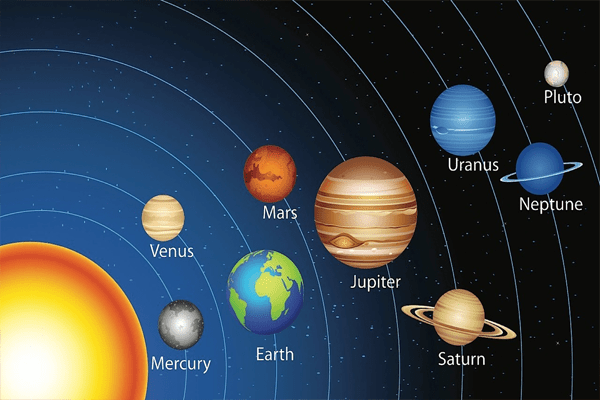
planetary configuration In Indian astrology, planetary configurations play a crucial role in interpreting various aspects of a person’s life and character. Here are some common planetary configurations recognized in Indian astrology: Graha Yuddha (Planetary War): When two or more planets come very close to each other in the same sign or degree, it’s considered a Graha Yuddha. This configuration can intensify the effects of the planets involved and may signify conflicts or competitions between their energies. Graha Mala (Planetary Garland): When all planets are located in consecutive signs without any gaps, forming a continuous sequence like a garland, it’s called Graha Mala. This configuration is considered auspicious and may indicate a harmonious flow of energies in the individual’s life. Graha Malika (Planetary Necklace): When all planets occupy consecutive houses in the birth chart, forming a necklace-like pattern, it’s termed Graha Malika. This configuration is also seen as auspicious and may signify a balanced and well-rounded personality. Kemadruma Yoga: This occurs when there are no planets (except the Moon) on either side of the Moon in the birth chart. It is considered a challenging configuration and may indicate periods of loneliness, emotional instability, or setbacks in life. Pancha Mahapurusha Yoga: This yoga occurs when one of the five planets (Mars, Mercury, Jupiter, Venus, or Saturn) is in its own sign or exalted sign in a Kendra (angular house) in the birth chart. It indicates great strength and potential in the individual’s life related to the significations of the planet involved. Neechabhanga Raja Yoga: When a debilitated planet receives a cancellation of debilitation due to certain conditions in the birth chart, it forms Neechabhanga Raja Yoga. This yoga mitigates the negative effects of the debilitated planet and can bring unexpected success and rise in life. Gajakesari Yoga: This yoga occurs when Jupiter is in Kendra (angular house) from the Moon or from the Lagna (ascendant). It is considered highly auspicious and may indicate intelligence, wisdom, prosperity, and spiritual growth. Chandra-Mangala Yoga: This yoga occurs when the Moon and Mars are conjunct or in mutual aspect in the birth chart. It can indicate strong emotional nature, assertiveness, courage, and leadership abilities. These are just a few examples of planetary configurations in Indian astrology. Each configuration carries its unique significance and is interpreted based on the positions and influences of the planets involved in the birth chart. Astrologers analyze these configurations to provide insights into different aspects of an individual’s life and potential experiences.

Planetary Configuration Read More »

Uncategorized

Vedic Astrology

Vedic Astrology Indian astrology, also known as Vedic astrology or Jyotish, is a system of astrology originating in ancient India. It is deeply rooted in the Vedic tradition and is considered one of the oldest forms of astrology in the world. Here are some key features of Indian astrology: Overall, Indian astrology is a complex and comprehensive system that seeks to understand the influence of cosmic energies on human life and destiny. It is deeply ingrained in Indian culture and continues to be widely practiced and respected by millions of people around the world.

Vedic Astrology Read More »

Uncategorized