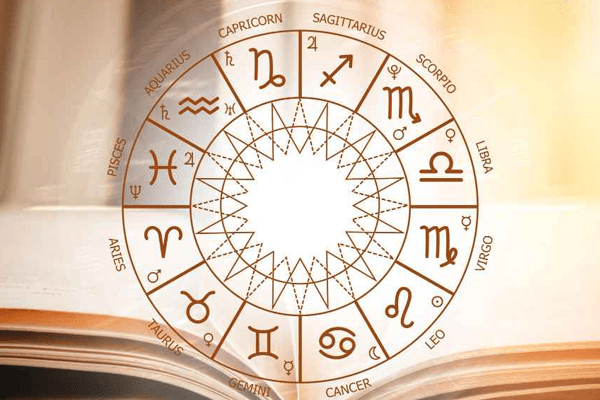
Indian astrological philosophy
Indian astrological philosophy An exploration into the origins of Indian astrological philosophy would suggest that ancient seers must have meticulously observed human experiences over millennia. Their keen analysis likely led them to uncover the underlying laws of nature shaping these experiences. This endeavour may have enabled them to identify common factors influencing human life. Consequently, they reasoned that terrestrial factors alone could not account for these influences; they inferred the involvement of external forces. They concluded that the movements and cycles of celestial bodies held significant sway over earthly affairs, codifying these observations into what we now know as astrology. This astrological science, derived from meditative insight and extraordinary experiences of revered seers, surpasses mere fortune-telling and materialistic interpretations. Through dispassionate study, one can recognize astrology as the study of human behaviour and experiences within the context of time and space. Time, akin to space, lacks a discernible beginning or end and is regulated by spatial concepts. In astrology, space is confined to the zodiacal path of planets delineated by constellations. Human beings, particularly, embody miniature versions of the cosmic universe, possessing its myriad qualities. This microcosmic reflection, termed Brahmaanda, encapsulates the essence of the universe. Seers, through intuition, comprehended the enigmatic universe’s mysteries and imparted them as astrological wisdom, basing tenets on celestial positions and human experiences as indicated by the individual’s horoscope. Astrology emerges as a systematic endeavour to elucidate natural phenomena. At its core, astrology draws upon Vedantic principles, asserting the unity of the Universe. Just as laws manifest in one part of the Universe, they operate universally. Man, as a microcosm, mirrors the cosmos, with an inner world visible only to yogic insight. The laws governing celestial bodies are likewise at work within us. Furthermore, astrology acknowledges the duality of human existence: individuals are both subject to the effects of past karma and capable of independent actions free from such influences. In India, the study of the stars, known as Nakshathra Vidya, has long been regarded as a profound intellectual pursuit, evident in both Vedic and pre-Vedic literature, including the Puranas. Astrology, often referred to as the ‘eye of knowledge,’ holds significant importance within Hindu religion and philosophy, having been passed down by esteemed seers. Considered the oldest of all sciences, astrology has captivated humanity’s fascination, inspiring poets across generations with the romance associated with the stars. Its roots are traced back to the Vedas, where the wise Rishis, through expanded consciousness, communed with the celestial bodies. Ancient beliefs held that the stars were the dwelling places of the gods, indicating astrology’s origins in stellar worship. The literature on astrology is vast, paralleling the history of humanity itself. No single scholar could hope to unravel all its intricacies in a lifetime, given the sheer volume of extant works. Astrology is described both as a science and an art, with horoscope casting and interpretation being central for over two millennia. In India, the study of the stars, known as Nakshathra Vidya, has long been regarded as a profound intellectual pursuit, evident in both Vedic and pre-Vedic literature, including the Puranas. Astrology, often referred to as the ‘eye of knowledge,’ holds significant importance within Hindu religion and philosophy, having been passed down by esteemed seers. Considered the oldest of all sciences, astrology has captivated humanity’s fascination, inspiring poets across generations with the romance associated with the stars. Its roots are traced back to the Vedas, where the wise Rishis, through expanded consciousness, communed with the celestial bodies. Ancient beliefs held that the stars were the dwelling places of the gods, indicating astrology’s origins in stellar worship. Over time, astrology has evolved from superstition to a true science of the heavens. The literature on astrology is vast, paralleling the history of humanity itself. No single scholar could hope to unravel all its intricacies in a lifetime, given the sheer volume of extant works. Astrology is described both as a science and an art, with horoscope casting and interpretation being central for over two millennia Skilled astrologers who possess comprehensive knowledge across various fields can serve as guides, philosophers, and teachers to society. A true astrologer’s presence sanctifies a place, deterring sinners. Engaging in the study and interpretation of celestial phenomena, such individuals contribute to the collective wisdom and understanding of human destiny.
Indian astrological philosophy Read More »
Uncategorized