ASHTAMANGALA PRASNA
Ashtamangala Prasna, also known as Ashta Mangala Prasnam, is a traditional practice in Hinduism, particularly in South India, used to seek divine guidance and blessings for various endeavors, such as the consecration of temples, the inauguration of events, or addressing problems and concerns in people’s lives. The term “Ashtamangala” refers to eight auspicious symbols or objects, and “Prasna” means questioning or inquiry.
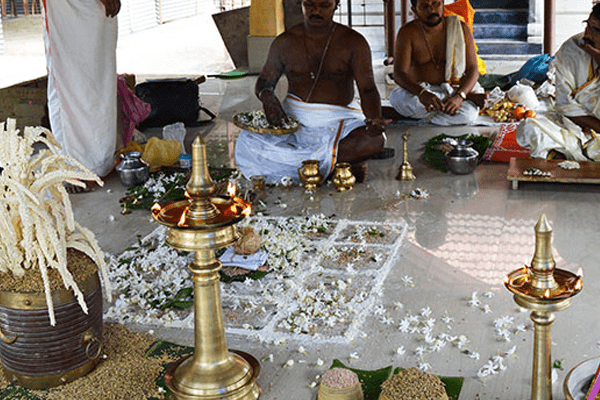
During an Ashtamangala Prasna ceremony, a group of priests or astrologers conducts a series of rituals and divination techniques to communicate with the divine and seek answers to specific questions or concerns. The priests typically use various tools such as cowrie shells, coins, grains, and sometimes astrology charts to interpret the signs and symbols revealed during the ceremony.
The eight auspicious symbols or objects, which are central to the Ashtamangala Prasna, can vary slightly depending on regional traditions but commonly include:
1. Metal Box: Symbolizes containment, protection, and preservation.
2. Mirror: Signifies reflection, self-awareness, and inner beauty.
3. Gold Coin: Represents wealth, prosperity, and abundance.
4. White Flower: Symbolizes purity, innocence, and spirituality.
5. Akshata (Rice and Paddy Mixed): Represents fertility, sustenance, and auspiciousness.
6. Fruits: Signify nourishment, abundance, and the sweetness of life.
7. Betel Leaf with Areca Nut: Symbolizes hospitality, unity, and auspicious beginnings.
8. Palm Leaf and Oil Lamp: Represents knowledge, enlightenment, and dispelling darkness.
These symbols are used during the divination process to interpret the answers received from the divine realm and they are integral to the Ashtamangala Prasna ceremony and are used by priests or astrologers during the divination process to seek divine guidance and blessings for various endeavors or concerns. The priests carefully analyse the patterns, movements, and positions of these objects to provide guidance and insights into the questions posed by the individuals or the community. Overall, the Ashtamangala Prasna ceremony is a deeply rooted tradition aimed at seeking divine guidance and blessings for the well-being and prosperity of individuals, communities, and sacred endeavors in Hinduism.
The procedure for conducting Ashtamangala Prasna can vary slightly depending on regional traditions and the specific purpose of the ceremony. However, here’s a general outline of the steps involved:
Preparation-The venue for the ceremony, often a temple or a sacred space, is cleaned and purified. The necessary items for the ritual, including the eight auspicious symbols (as per your list or traditional symbols), offerings, and tools for divination, are arranged.
Invocation of Deities- The ceremony begins with the chanting of prayers and mantras to invoke the blessings of deities and seek their guidance for the proceedings.
Selection of Participants- A group of priests or astrologers, knowledgeable in the rituals and practices of Ashtamangala Prasna, are chosen to conduct the ceremony.
Questioning- The individuals or community members seeking guidance present their questions or concerns to the priests. These questions may relate to personal matters, community issues, or the consecration of temples, among other things.
Arrangement of Auspicious Symbols-The eight auspicious symbols are arranged in a specific manner within the ceremonial space. Each symbol holds significance and is believed to channel divine energy and guidance.
Divination Process- The priests use various divination techniques, such as tossing cowrie shells, coins, grains, or other objects, to seek answers from the divine realm. They interpret the patterns, movements, and positions of these objects to provide insights into the questions posed.
Interpretation- Based on the divination results, the priests interpret the signs and symbols revealed during the ceremony. They offer guidance, predictions, and solutions to address the concerns raised by the participants.
Offerings and Prayers-Offerings such as fruits, flowers, incense, and lamps are made to the deities as gratitude for their blessings and guidance. Prayers and mantras are recited to conclude the ceremony and invoke continued divine support.
Conclusion- The Ashtamangala Prasna ceremony concludes with blessings bestowed upon the participants, and they are encouraged to act upon the guidance received during the ritual.
Follow-Up- Participants may be advised to perform certain rituals, remedies, or actions based on the guidance received during the ceremony to mitigate any challenges or enhance positive outcomes.
Overall, the Ashtamangala Prasna ceremony is a sacred and elaborate ritual aimed at seeking divine guidance, blessings, and solutions to various concerns and endeavors in Hindu tradition.